News

News

Which Outdoor Disconnect Switch Is Suitable for Different High-Voltage Applications?

2026-11-03 0 Leave me a message

A utility substation and a railway traction station both need an Outdoor Disconnect Switch. Both operate at high voltage. Both must isolate equipment for maintenance. But the switch that works for one may be entirely wrong for the other. A utility substation may require a ganged, three-pole switch with motorized operation and remote indication. A railway traction station may require a single-pole switch with a specific mounting configuration and a high mechanical endurance for frequent operation. A wind farm collector substation may require a hookstick-operated switch with a visible break for safety isolation. The application determines the design, and the design determines the procurement specification. For buyers, understanding which Outdoor Disconnect Switch suits which application is essential for avoiding over-specification, under-specification, and the operational problems that follow.


This guide is written for buyers who are sourcing Outdoor Disconnect Switches for high-voltage applications. We will compare the main types of disconnect switches—ganged, hookstick, load-break, and specialty designs—and explain how each is suited to different applications. We will cover the key selection criteria, the specifications that should be included in a purchase order, and the evaluation criteria for a supplier. We will also provide detailed product parameters from our factory at Zhejiang Usune Electric Co., Ltd. Whether you are specifying switches for a utility substation, an industrial plant, a railway network, or a renewable energy project, this guide will help you select the right switch for the application.

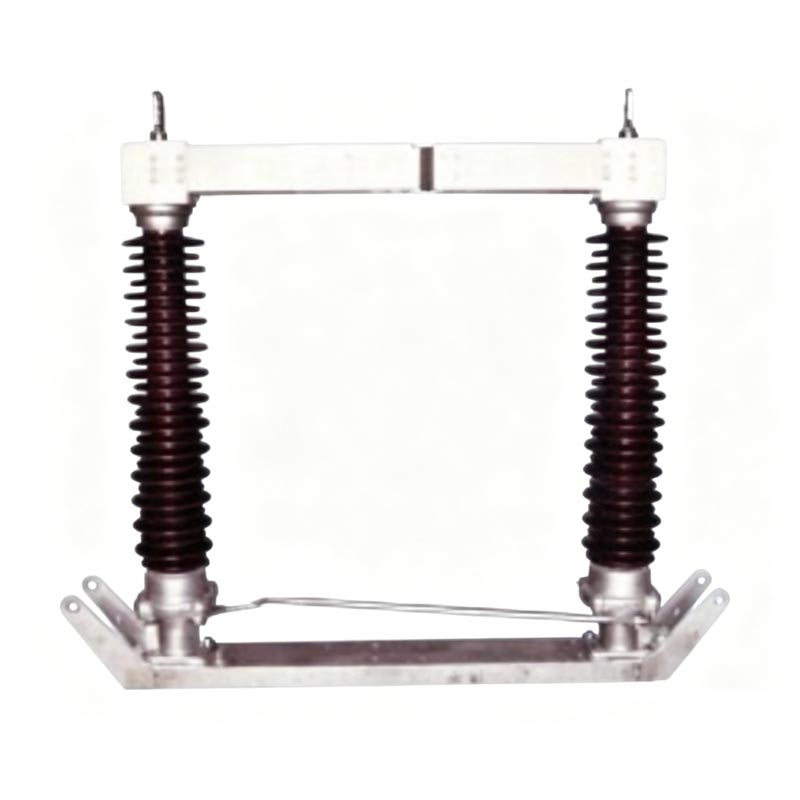
Gw4 Disconnect Switch


Table of Contents


1. What Are the Main Types of Outdoor Disconnect Switches?

Outdoor Disconnect Switches are classified by their operating mechanism, their mounting configuration, and their interrupting capability. The four main types are the ganged switch, the hookstick switch, the load-break switch, and the specialty switch. The ganged switch operates all three poles simultaneously through a common mechanism, and it is typically used in substations where remote or motorized operation is required. The hookstick switch is operated by a lineman using an insulated stick, and it is used in distribution and collector circuits where manual operation is acceptable. The load-break switch is designed to interrupt load current, not just to isolate a de-energized circuit. The specialty switch includes designs for railway traction, capacitor bank switching, and other specific applications. The table below summarizes these types.

Type Operation Interrupting Capability Typical Application
Ganged Switch Manual, motorized, or remote Isolation only Utility substations, industrial substations
Hookstick Switch Manual (insulated stick) Isolation only Distribution lines, wind farm collectors
Load-Break Switch Manual or motorized Load current interruption Distribution feeders, capacitor banks
Specialty Switch Custom Varies Railway traction, capacitor banks

At Zhejiang Usune Electric Co., Ltd., our factory manufactures all four types of Outdoor Disconnect Switch. We work with our customers to understand the application and to select the switch type that best fits the operational requirements. Our goal is to provide a switch that performs reliably and meets the applicable standards.


2. Which Switch Suits Utility Substation Applications?

Utility substations typically require a ganged Outdoor Disconnect Switch with motorized operation and remote indication. The switch must be capable of isolating transformers, busbars, and circuit breakers for maintenance. It must provide a visible break that can be confirmed by the operator. It must be rated for the substation's voltage and short-circuit current. And it must be compatible with the substation's control and protection system. The ganged switch is preferred because it operates all three poles simultaneously, which is essential for three-phase isolation and for safety. The table below summarizes the key requirements for utility substation switches.

Requirement Specification Why It Matters
Voltage Rating 72.5 kV - 550 kV Must match substation voltage
Short-Circuit Withstand Up to 63 kA Must withstand fault currents
Operation Motorized with remote control Enables remote isolation
Visible Break Clear air gap Confirms isolation for safety
Interlocks Mechanical and electrical Prevents incorrect operation

At our factory, we manufacture ganged Outdoor Disconnect Switches for utility substations at voltages from 72.5 kV to 550 kV. We offer manual, motorized, and remote operation options, along with visible break and interlocks. Our engineering team can help you specify the switch for your substation requirements.


3. Which Switch Suits Industrial and Railway Applications?

Industrial and railway applications have different requirements from utility substations. Industrial plants often require a hookstick-operated Outdoor Disconnect Switch for isolating feeders, motors, and capacitor banks. The switch must be robust, easy to operate, and suitable for the plant's environmental conditions. Railway traction applications require a specialty switch that is designed for the specific voltage, frequency, and mechanical endurance of the traction system. The switch must be able to withstand the vibration and pollution of the railway environment. The table below summarizes the key requirements for these applications.

Application Recommended Switch Type Key Requirements
Industrial Plant Hookstick or ganged Robust, easy to operate, pollution-resistant
Railway Traction Specialty single-pole Vibration-resistant, high mechanical endurance
Wind Farm Collector Hookstick Visible break, compact, outdoor-rated
Capacitor Bank Load-break or specialty Capacitor switching capability, restrike-free

At Usune, our factory manufactures hookstick, ganged, and specialty Outdoor Disconnect Switches for industrial and railway applications. We can customize the switch to meet the specific requirements of the application, including the mounting configuration, the operating mechanism, and the environmental protection. Our goal is to provide a switch that performs reliably in the field.


4. When Does a Load-Break Switch Make Sense?

A load-break Outdoor Disconnect Switch makes sense when the switch must interrupt load current, not just isolate a de-energized circuit. In a distribution feeder, for example, the switch may be used to sectionalize the feeder without first opening the upstream circuit breaker. A load-break switch can interrupt the load current and clear the circuit, allowing the operator to isolate a section of the feeder for maintenance. Load-break switches are also used for capacitor bank switching, where they must handle the inrush current and the restrike risk. The table below summarizes the applications where a load-break switch is appropriate.

Application Why Load-Break Is Required Typical Rating
Distribution Feeder Sectionalizing without upstream breaker operation 15 kV - 38 kV, 600 A
Capacitor Bank Switching capacitive current, restrike-free 15 kV - 38 kV, 200 A
Loop Distribution Transferring load between circuits 15 kV - 38 kV, 600 A
Industrial Feeder Isolating motors and transformers under load 5 kV - 15 kV, 400 A

At our factory, we manufacture load-break Outdoor Disconnect Switches for distribution and industrial applications. Our switches are designed to interrupt load current safely and to withstand the inrush and restrike conditions of capacitor bank switching. Our engineering team can help you select the right switch for your application.


5. What Specifications Should Buyers Include in a Purchase Order?

When purchasing an Outdoor Disconnect Switch, the buyer should include detailed specifications in the purchase order to ensure that the product meets the application's requirements. The key specifications are the voltage rating, the continuous current rating, the short-circuit withstand rating, the interrupting capability, the number of poles, the operation method, the mounting type, the environmental protection, and the applicable standards. The table below summarizes the specifications that should be included in a purchase order.

Specification Unit of Measure Example
Voltage Rating kV 145 kV
Continuous Current A 1,250 A
Short-Circuit Withstand kA 40 kA (3s)
Interrupting Capability Load-break / Isolation Load-break, 600 A
Number of Poles 1, 2, 3 3
Operation Manual, motorized, hookstick Motorized with remote control
Mounting Type Pole-mounted, frame-mounted Frame-mounted
Environmental Protection IP rating IP55
Standards IEC, IEEE, GB IEC 62271-102

At Zhejiang Usune Electric Co., Ltd., our factory works with our customers to ensure that all specifications are clearly defined and understood before production begins. We provide technical data sheets and drawings for approval. Our goal is to deliver Outdoor Disconnect Switches that meet the application's requirements.


6. How Do You Evaluate an Outdoor Disconnect Switch Supplier?

Evaluating a supplier of Outdoor Disconnect Switches requires a focus on manufacturing capability, testing, standards compliance, and technical support. The supplier must have the capability to manufacture switches to the required specifications, including the voltage, current, and short-circuit ratings. They must test every switch for mechanical operation, dielectric strength, and contact resistance. They must comply with the applicable standards, such as IEC 62271-102 or IEEE C37.30. And they must provide technical support to help you select the right switch for your application. The table below summarizes the evaluation criteria.

Evaluation Criterion What to Look For Why It Matters
Manufacturing Capability CNC machining, assembly, testing equipment Ensures product quality and consistency
Testing Mechanical, dielectric, contact resistance tests Verifies performance and safety
Standards Compliance IEC 62271-102, IEEE C37.30 Ensures compliance with industry requirements
Technical Support Application engineering, selection assistance Helps select the right switch
Project Experience Utility, industrial, railway references Demonstrates capability and reliability

At our factory, we have been producing Outdoor Disconnect Switches for over a decade. We use precision manufacturing and rigorous testing to ensure that our switches meet the applicable standards. Our technical team is available to assist with selection and application engineering. We invite you to evaluate us against these criteria and to consider us as your partner for Outdoor Disconnect Switches.


7. What Are the Key Product Parameters from Our Factory?

The following table provides the key product parameters for our Outdoor Disconnect Switches. These switches are available in ganged, hookstick, and load-break configurations for utility, industrial, and railway applications. Our factory can also produce custom switches to meet specific requirements.

Parameter Specification Range Notes
Voltage Rating 12 kV - 550 kV Selected for application
Continuous Current 400 A - 3,150 A Selected for load
Short-Circuit Withstand 25 kA - 63 kA (3s) Selected for fault level
Interrupting Capability Isolation, Load-break Selected for operation
Number of Poles 1, 2, 3 Selected for system
Operation Manual, Motorized, Hookstick Selected for control
Mounting Pole-mounted, Frame-mounted Selected for site
Environmental Protection IP54, IP55, IP66 Selected for environment
Standards IEC 62271-102, IEEE C37.30 Compliance with industry standards
MOQ 1 unit Negotiable for large orders
Lead Time 6 - 12 weeks Depends on quantity and customization

At our factory, we manufacture our Outdoor Disconnect Switches to meet these specifications and more. We can customize the voltage, current, short-circuit withstand, operation, and mounting to suit your specific requirements. Our quality control system includes inspection of raw materials, in-process inspection, and final inspection before shipment. Our goal is to provide our customers with high-quality Outdoor Disconnect Switches that meet their application requirements.


8. Frequently Asked Questions (FAQ)

Question 1: What is the difference between a ganged and a hookstick disconnect switch?

Answer: A ganged switch operates all three poles simultaneously through a common mechanism, and it is typically used in substations where remote or motorized operation is required. A hookstick switch is operated by a lineman using an insulated stick, and it is used in distribution and collector circuits where manual operation is acceptable. The choice depends on the operation requirements and the accessibility of the site.

Question 2: When should I choose a load-break switch instead of an isolation switch?

Answer: Choose a load-break switch when the switch must interrupt load current, not just isolate a de-energized circuit. This is the case in distribution feeders, capacitor banks, and loop distribution systems, where the switch is used for sectionalizing or load transfer. An isolation switch is suitable only when the circuit is de-energized before operation.

Question 3: What is the typical voltage range for outdoor disconnect switches?

Answer: Outdoor Disconnect Switches are available for voltages from 12 kV to 550 kV, depending on the application. Distribution switches are typically rated for 15 kV to 38 kV, while substation switches are rated for 72.5 kV to 550 kV. Railway traction switches have specific voltage ratings that depend on the traction system. Our factory can supply switches across the full range.

Question 4: How do I specify the environmental protection for an outdoor disconnect switch?

Answer: The environmental protection is specified by the IP rating. For most outdoor applications, IP54 or IP55 is sufficient. For coastal or heavily polluted sites, IP66 may be required. The IP rating should be selected based on the site conditions, including rainfall, dust, and pollution. Our technical team can advise on the appropriate rating for your site.

Question 5: What standards should an outdoor disconnect switch comply with?

Answer: Outdoor Disconnect Switches should comply with the applicable international standards, such as IEC 62271-102 for high-voltage alternating current disconnectors and earthing switches, or IEEE C37.30 for high-voltage air switches. The specific standard depends on the region and the customer's requirements. Our factory manufactures switches to comply with IEC, IEEE, and GB standards, and we provide the relevant test reports with every shipment.


9. Conclusion

The choice of an Outdoor Disconnect Switch depends on the application. Utility substations typically require ganged, motorized switches with visible break and interlocks. Industrial and railway applications require hookstick, specialty, or load-break switches that are suited to the specific operating conditions. Load-break switches are essential when the switch must interrupt load current, not just isolate a de-energized circuit. By understanding the differences between the switch types and the requirements of the application, buyers can select a switch that performs reliably and meets the applicable standards. At Zhejiang Usune Electric Co., Ltd., our factory manufactures all types of Outdoor Disconnect Switches for high-voltage applications. We work with our customers to select the right switch for their specific requirements.

Whether you are specifying switches for a utility substation, an industrial plant, a railway network, or a renewable energy project, we invite you to contact us to discuss your requirements. We can provide technical data, samples, and customized solutions. Our commitment to quality and customer satisfaction has made us a trusted partner for high-voltage switch projects around the world.

Contact Zhejiang Usune Electric Co., Ltd. today to discuss your Outdoor Disconnect Switch requirements and discover how our switches can meet your application needs.

Related News
Leave me a message
X
We use cookies to offer you a better browsing experience, analyze site traffic and personalize content. By using this site, you agree to our use of cookies. Privacy Policy
RejectAccept