News

News

How Does an Indoor Vacuum Circuit Breaker Protect Medium Voltage Distribution Systems?

2026-10-27 0 Leave me a message

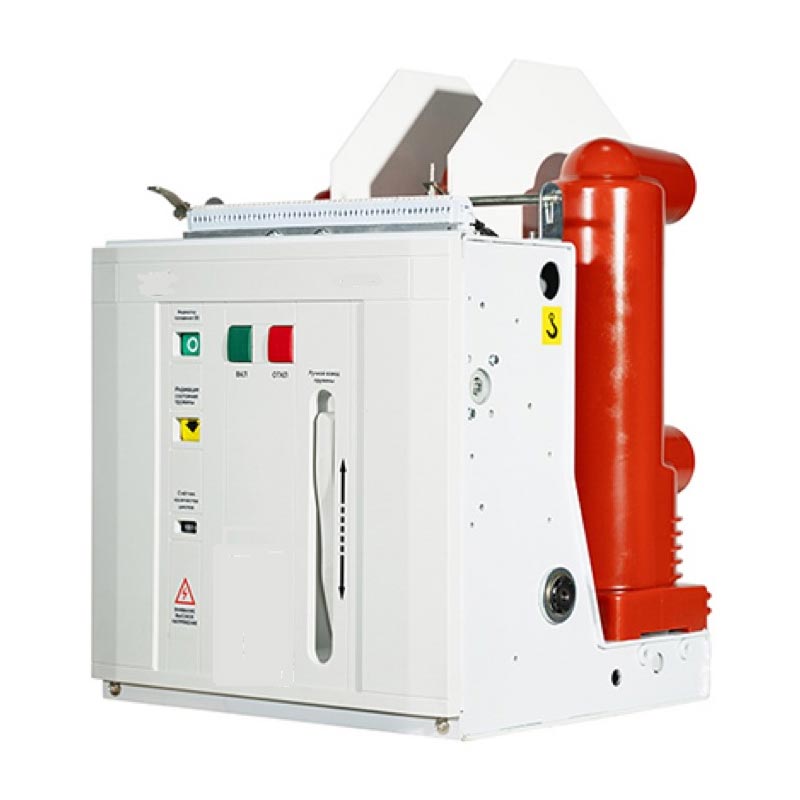
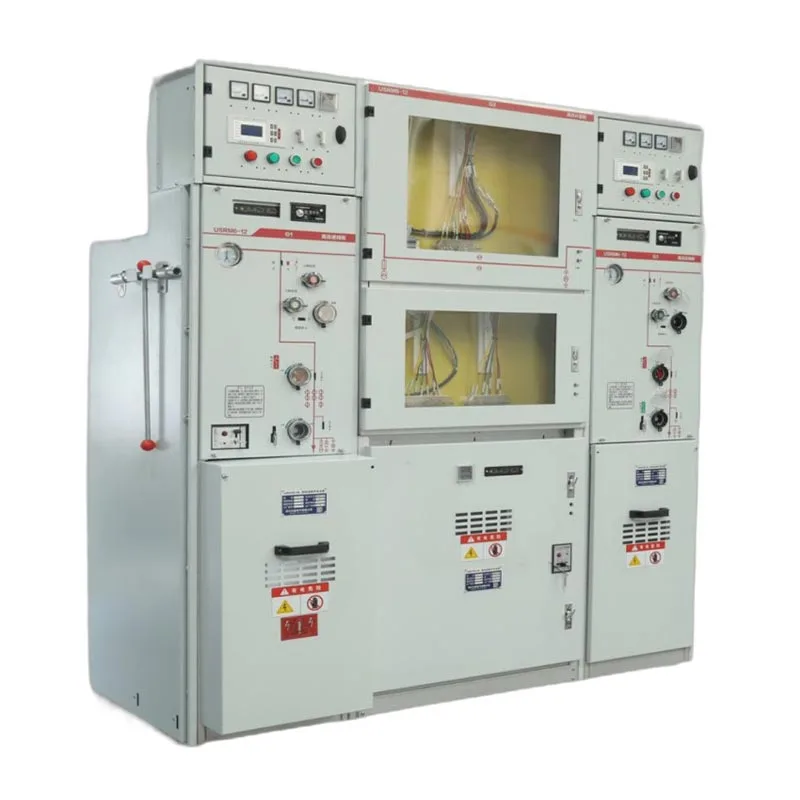
A medium voltage distribution system sits between the transmission grid and the end user. It operates at voltages from 3 kV to 40.5 kV and carries the power that feeds factories, commercial buildings, and residential neighborhoods. When a fault occurs on this system, the fault current can reach tens of thousands of amperes. The device that interrupts this current is the Indoor High Voltage Vacuum Circuit Breaker. Unlike an oil or SF6 breaker, the vacuum circuit breaker uses a sealed vacuum interrupter to extinguish the arc. This design offers maintenance-free operation, long mechanical life, and compact dimensions, making it the dominant choice for indoor medium voltage switchgear. For procurement managers, understanding how the vacuum circuit breaker protects the distribution system is essential for specifying the right equipment.


This guide is written for buyers who are responsible for sourcing Indoor High Voltage Vacuum Circuit Breakers for medium voltage distribution systems. We will explain the protection mechanism, the role of the vacuum interrupter, the operating mechanism, the coordination with protective relays, and the criteria for selecting a supplier. We will also provide detailed product parameters from our factory at Zhejiang Usune Electric Co., Ltd. Whether you are building a new substation, upgrading an existing switchgear lineup, or sourcing replacement breakers, this guide will help you make an informed decision that ensures the safety and reliability of your distribution system.

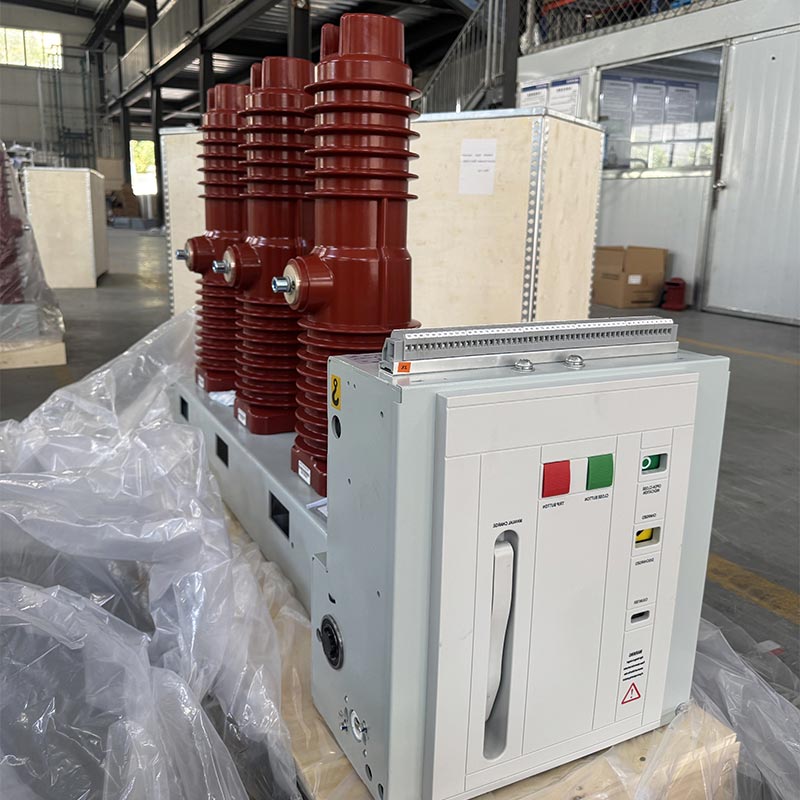
Indoor High Voltage Vacuum Circuit Breaker


Table of Contents


1. What Does an Indoor Vacuum Circuit Breaker Actually Do in a Distribution System?

An Indoor High Voltage Vacuum Circuit Breaker performs three essential functions in a medium voltage distribution system. First, it carries the normal load current continuously without significant losses or heating. Second, it interrupts the fault current when a short circuit or ground fault occurs, isolating the faulted section from the rest of the system. Third, it provides a means of switching the circuit for maintenance, load transfer, or system reconfiguration. These functions may sound straightforward, but they are performed under demanding conditions. The breaker must interrupt fault currents that can reach 40 kA at voltages up to 40.5 kV. It must do so within 50 to 80 milliseconds, before the fault can cause widespread damage. And it must operate reliably after thousands of operations. The table below summarizes the functions of the breaker in a distribution system.

Function Description Benefit to the Distribution System
Continuous Current Carrying Carries normal load current without significant loss Ensures efficient power delivery
Fault Current Interruption Interrupts short-circuit and ground faults Prevents fault propagation and equipment damage
Switching for Maintenance Provides a means to isolate the circuit Enables safe maintenance and reduces downtime
System Reconfiguration Allows the circuit to be switched in or out Provides operational flexibility for the grid
Fault Isolation Limits the impact of a fault to the affected section Preserves power supply to healthy sections

At Zhejiang Usune Electric Co., Ltd., our factory manufactures Indoor High Voltage Vacuum Circuit Breakers for medium voltage distribution systems at voltages from 12 kV to 40.5 kV. We design our breakers to meet the most demanding fault current and switching requirements. Our engineering team works with utilities and EPC contractors to specify the right breaker for each distribution application.


2. How Does the Vacuum Interrupter Extinguish the Arc?

The vacuum interrupter is the heart of the Indoor High Voltage Vacuum Circuit Breaker. It is a sealed ceramic or glass envelope that contains a pair of contacts in a high vacuum environment. When the contacts separate to interrupt a fault, an arc forms. In a vacuum, the arc is not a gas discharge like in air or SF6. Instead, it is a metal vapor arc that is sustained by the vaporization of the contact material. The vacuum interrupter extinguishes the arc by rapidly condensing the metal vapor back onto the contact surfaces and the surrounding shields. The vacuum environment also provides extremely high dielectric strength, which prevents the arc from restriking after it is extinguished. The table below summarizes the arc extinction process in a vacuum interrupter.

Stage What Happens Result
Contact Separation Contacts part, arc forms Fault current continues to flow
Metal Vapor Arc Arc burns in metal vapor from contacts Arc is sustained until current zero
Current Zero AC current naturally crosses zero Arc is momentarily extinguished
Vapor Condensation Metal vapor condenses on shields Dielectric strength recovers rapidly
Dielectric Recovery Vacuum gap regains insulation Arc cannot restrike, circuit is interrupted

At our factory, we use vacuum interrupters from reputable manufacturers that are tested to the relevant IEC standards. We verify the vacuum integrity of every interrupter before assembly. Our breakers are tested to verify their interrupting capacity and dielectric recovery performance. Our goal is to provide our customers with breakers that interrupt faults reliably throughout their service life.


3. Why Is the Operating Mechanism Critical for Protection Reliability?

The operating mechanism is the component that opens and closes the vacuum interrupter contacts. It must deliver the required force and speed to separate the contacts within the specified opening time. If the mechanism is too slow, the arc will persist longer than necessary, and the fault will not be cleared in time. If the mechanism is too weak, the contacts may not separate fully, and the arc may restrike. The operating mechanism must also be reliable over thousands of operations, because the breaker may sit idle for months and then be called upon to operate. The most common types of operating mechanisms for indoor vacuum circuit breakers are spring mechanisms and magnetic actuators. Spring mechanisms store energy in a spring and release it to open or close the breaker. Magnetic actuators use an electromagnetic coil to drive the contacts. The table below compares these mechanisms.

Mechanism Type Operating Principle Advantages Typical Application
Spring Mechanism Stored energy in spring Reliable, proven, low maintenance Standard distribution switchgear
Magnetic Actuator Electromagnetic coil drive Fewer moving parts, precise control Compact switchgear, frequent operation

At Zhejiang Usune Electric Co., Ltd., our factory uses spring mechanisms for our standard Indoor High Voltage Vacuum Circuit Breaker products because of their proven reliability and low maintenance requirements. We also offer magnetic actuator options for applications that require frequent operation or compact dimensions. We test the operating mechanism of every breaker to verify its opening and closing times and its mechanical endurance.


4. How Does the Breaker Coordinate with Protective Relays?

The Indoor High Voltage Vacuum Circuit Breaker does not operate in isolation. It is part of a protection scheme that includes protective relays, current transformers, and voltage transformers. The relays detect the fault and send a trip signal to the breaker. The current transformers provide the relay with a scaled-down replica of the primary current. The breaker then opens to clear the fault. The coordination between the relay and the breaker is critical. The relay must operate within the breaker's opening time, and the breaker must open before the fault causes damage. The table below summarizes the coordination parameters.

Component Function Coordination Requirement
Current Transformer Scales primary current for relay Accurate within protection class
Protective Relay Detects fault, sends trip signal Operating time within breaker clearing time
Breaker Opens to clear fault Opening time within relay coordination time
Upstream Device Backup protection Selectivity margin with downstream breaker

At our factory, we provide the opening and closing time data for our Indoor High Voltage Vacuum Circuit Breaker products, so that our customers can perform the coordination study. We also provide technical support to help our customers verify that the breaker coordinates correctly with their protective relays. Our goal is to ensure that the protection scheme operates as intended.


5. What Are the Key Specifications for Medium Voltage Distribution?

When buying an Indoor High Voltage Vacuum Circuit Breaker for a medium voltage distribution system, several specifications are critical. These include the rated voltage, the rated current, the short-circuit breaking current, the interrupting time, the mechanical endurance, and the operating mechanism type. The rated voltage must match or exceed the system voltage. The rated current must exceed the maximum load current. The short-circuit breaking current must exceed the maximum fault current at the installation point. The interrupting time must be short enough to maintain system stability. The mechanical endurance must be sufficient for the expected number of operations. The operating mechanism must be reliable and easy to maintain. The table below summarizes these specifications.

Specification Typical Range Importance
Rated Voltage 12 kV - 40.5 kV Must match system voltage
Rated Current 630 A - 4,000 A Must exceed maximum load current
Short-Circuit Breaking Current 20 kA - 40 kA Must exceed maximum fault current
Interrupting Time 50 ms - 80 ms Must maintain system stability
Mechanical Endurance 10,000 - 30,000 operations Must match expected operation count
Operating Mechanism Spring, Magnetic Actuator Selected for reliability and maintenance
Standards IEC 62271-100, GB/T 1984 Compliance with international standards

At Usune, our factory manufactures Indoor High Voltage Vacuum Circuit Breakers to meet these specifications and more. We can customize the breaker to suit specific project requirements, including special voltage ratings, current ratings, and operating mechanisms. Our engineering team can assist with the selection process and provide detailed technical data for your project.


6. How Do You Evaluate an Indoor Vacuum Circuit Breaker Supplier?

Evaluating a supplier of Indoor High Voltage Vacuum Circuit Breakers for medium voltage distribution requires a focus on manufacturing capability, type testing, quality management, project experience, and after-sales support. The supplier must have the capability to manufacture breakers to the required specifications and to perform type tests to verify their performance. They must have a quality management system that ensures consistent quality. They must have experience with distribution projects and an understanding of the grid requirements. And they must provide after-sales support, including installation, commissioning, and maintenance. The table below summarizes these evaluation criteria.

Evaluation Criterion What to Look For Why It Matters
Manufacturing Capability Advanced machining, assembly, and testing equipment Ensures product quality and consistency
Type Testing IEC 62271-100 test reports Verifies performance and compliance
Quality Management ISO 9001 certification, inspection records Ensures consistent product quality
Project Experience Distribution substation references, utility approvals Demonstrates capability and reliability
After-Sales Support Installation, commissioning, maintenance Ensures long-term reliability

At our factory, we have been producing Indoor High Voltage Vacuum Circuit Breakers for over a decade. We have type test reports to IEC 62271-100. We are ISO 9001 certified, and we maintain detailed records of all inspections. Our project experience includes distribution substations in multiple countries. Our after-sales team is available to support installation, commissioning, and maintenance. We invite you to evaluate us against these criteria and to consider us as your partner for Indoor High Voltage Vacuum Circuit Breakers.


7. What Are the Key Product Parameters from Our Factory?

The following table provides the key product parameters for our Indoor High Voltage Vacuum Circuit Breakers. These breakers are designed for medium voltage distribution systems at voltages from 12 kV to 40.5 kV. Our factory can also produce custom breakers to meet specific requirements.

Parameter Specification Range Notes
Rated Voltage 12 kV, 24 kV, 40.5 kV Selected for system voltage
Rated Current 630 A - 4,000 A Selected for load current
Short-Circuit Breaking Current 20 kA - 40 kA Selected for fault level
Interrupting Time 50 ms - 80 ms Selected for coordination
Mechanical Endurance 10,000 - 30,000 operations Depends on model
Operating Mechanism Spring, Magnetic Actuator Selected for application
Insulation Medium Vacuum Maintenance-free
Standards IEC 62271-100, GB/T 1984 Compliance with international standards
MOQ 1 unit Negotiable for large orders
Lead Time 4 - 8 weeks Depends on quantity and customization

At our factory, we manufacture our Indoor High Voltage Vacuum Circuit Breakers to meet these specifications and more. We can customize the voltage, current, breaking capacity, and operating mechanism to suit your specific requirements. Our quality control system includes inspection of raw materials, in-process inspection, and final inspection before shipment. Our goal is to provide our customers with high-quality breakers that protect their distribution systems and ensure grid reliability.


8. Frequently Asked Questions (FAQ)

Question 1: How does a vacuum circuit breaker differ from an SF6 circuit breaker?

Answer: A vacuum circuit breaker uses a sealed vacuum interrupter to extinguish the arc, while an SF6 circuit breaker uses sulfur hexafluoride gas. Vacuum breakers are typically used for medium voltage applications (up to 40.5 kV) and are known for their maintenance-free operation and compact size. SF6 breakers are used for higher voltages and have a higher environmental impact due to the global warming potential of SF6. For medium voltage distribution, the vacuum circuit breaker is the dominant choice.

Question 2: What is the typical interrupting time for an indoor vacuum circuit breaker?

Answer: The typical interrupting time for an Indoor High Voltage Vacuum Circuit Breaker is 50 to 80 milliseconds. This includes the relay operating time and the breaker opening time. Faster interrupting times are available for applications that require them. At Zhejiang Usune Electric Co., Ltd., our breakers are tested to verify their interrupting time meets the specified performance.

Question 3: How often should an indoor vacuum circuit breaker be maintained?

Answer: Indoor vacuum circuit breakers are known for their low maintenance requirements. The vacuum interrupter is sealed and does not require maintenance. The operating mechanism should be inspected and lubricated every 3 to 5 years, or after a specified number of operations. The contacts should be inspected for wear after a heavy fault. Regular inspection and maintenance are essential for ensuring reliable operation.

Question 4: Can a vacuum circuit breaker be used for capacitor bank switching?

Answer: Yes, vacuum circuit breakers can be used for capacitor bank switching, but they must be specifically designed for this application. Capacitor bank switching imposes special requirements, including the ability to withstand high inrush currents and to restrike-free interruption. Our factory can supply breakers with special contact and nozzle designs for capacitor bank switching.

Question 5: What is the typical lead time for an indoor vacuum circuit breaker?

Answer: The typical lead time for an Indoor High Voltage Vacuum Circuit Breaker is 4 to 8 weeks, depending on the voltage rating, the breaking capacity, and the customization requirements. For standard models, the lead time may be shorter. At Zhejiang Usune Electric Co., Ltd., we work closely with our customers to meet their project schedules.


9. Conclusion

Indoor High Voltage Vacuum Circuit Breakers are essential for medium voltage distribution systems because they provide fast fault clearing, protect connected equipment, and provide the operational flexibility that modern grids require. The vacuum interrupter offers maintenance-free operation and long mechanical life, making it the dominant choice for indoor switchgear. For procurement managers and utility engineers, selecting the right breaker is a critical decision that affects the reliability and stability of the distribution system. At Zhejiang Usune Electric Co., Ltd., our factory has the expertise and the capability to manufacture Indoor High Voltage Vacuum Circuit Breakers that meet the most demanding medium voltage requirements. We use advanced vacuum interrupter technology, reliable operating mechanisms, and rigorous testing to ensure that our breakers deliver reliable performance.

Whether you are building a new distribution substation, upgrading an existing switchgear lineup, or sourcing replacement breakers, we invite you to contact us to discuss your requirements. We can provide technical data, type test reports, and customized solutions. Our commitment to quality and customer satisfaction has made us a trusted partner for utilities around the world.

Contact Zhejiang Usune Electric Co., Ltd. today to discuss your Indoor High Voltage Vacuum Circuit Breaker requirements and discover how our breakers can protect your medium voltage distribution system.

Related News
Leave me a message
X
We use cookies to offer you a better browsing experience, analyze site traffic and personalize content. By using this site, you agree to our use of cookies. Privacy Policy
RejectAccept