News

News

What Is an 11kV 1000kVA Dry Type Transformer and How Does It Work?

2026-09-18 0 Leave me a message

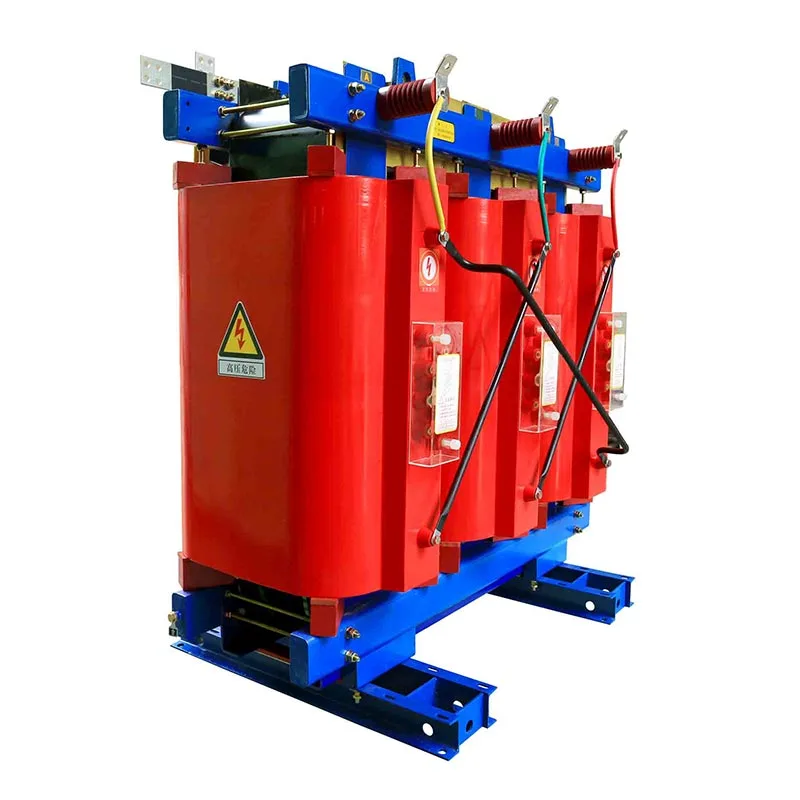
An 11kV 1000kVA Dry Type Transformer is a medium-voltage distribution transformer designed to transfer electrical energy from an 11kV supply to a lower utilization voltage while maintaining electrical isolation, voltage stability, and safe power distribution. This guide explains its construction, operating principle, specifications, applications, installation considerations, protection requirements, maintenance practices, and purchasing points for industrial and commercial power systems.

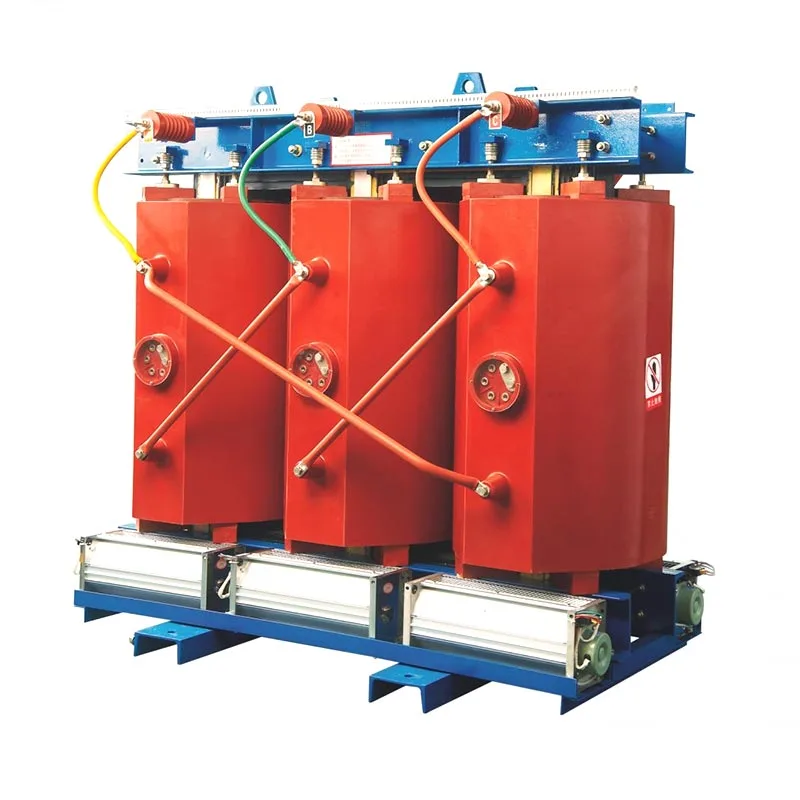
11kV 1000kVA Dry Type Transformer

A 1000kVA transformer provides a rated apparent power capacity of 1000 kilovolt-amperes, while 11kV identifies the primary voltage class. Unlike an oil-immersed transformer, a dry type transformer uses air as the cooling medium and does not rely on mineral insulating oil. Cast-resin designs can provide a compact solution for indoor substations, commercial buildings, industrial plants, data-related facilities, renewable-energy installations, and other locations where fire behavior, maintenance, space, and environmental considerations are important.

The actual specification should never be selected from the nameplate rating alone. Secondary voltage, vector group, impedance, insulation level, winding material, temperature rise, cooling method, enclosure protection, altitude, ambient temperature, harmonic loading, short-circuit conditions, and applicable standards all influence the final design.

Table of Contents

  1. What Is an 11kV 1000kVA Dry Type Transformer?
  2. What Do 11kV and 1000kVA Mean?
  3. How Is the Transformer Constructed?
  4. How Does an 11kV 1000kVA Dry Type Transformer Work?
  5. What Specifications Matter Most?
  6. What Are the Main Advantages?
  7. Where Is It Commonly Used?
  8. How Should a 1000kVA Transformer Be Selected?
  9. What Should Be Considered During Installation?
  10. How Should It Be Maintained?
  11. How Does It Compare With an Oil-Immersed Transformer?
  12. What Should Buyers Ask a Manufacturer?
  13. Frequently Asked Questions
  14. Final Considerations

What Is an 11kV 1000kVA Dry Type Transformer?

An 11kV 1000kVA Dry Type Transformer is a three-phase electrical transformer commonly used to reduce medium-voltage electricity to a lower voltage suitable for downstream distribution and electrical equipment. The transformer has a rated apparent power of 1000kVA and a primary voltage of 11kV.

The term dry type means that the transformer does not use liquid insulating oil as its primary insulation and cooling medium. Depending on the design, the windings may be open-wound, vacuum pressure impregnated, or encapsulated in resin. Cast-resin construction is particularly common where mechanical protection, environmental resistance, and reduced dependence on liquid insulation are required.

IEC 60076-11 specifically covers dry-type power transformers with equipment highest voltages up to 72.5kV and at least one winding operating above 1.1kV, making it directly relevant to many 11kV dry-type transformer designs. 

What Do 11kV and 1000kVA Mean?

11kV

11kV indicates the nominal primary-side voltage. The exact insulation level and rated voltage of the equipment must be confirmed from the project specification and applicable standard rather than inferred from the nominal voltage alone.

1000kVA

1000kVA is the transformer's rated apparent power. It describes the electrical loading capability under specified operating conditions rather than representing a direct 1000kW output.

For a three-phase system, the approximate full-load line current can be calculated using:

I = S ÷ (√3 × V)

For example, at 11kV and 1000kVA, the primary full-load current is approximately 52.5A. The secondary current depends on the selected low-voltage rating. At 400V, for example, the theoretical three-phase full-load current is approximately 1,443A. These calculations are useful for preliminary engineering, while final cable, breaker, busbar, and protection selection must follow the complete project design.

How Is the Transformer Constructed?

The performance of a dry-type transformer depends on the coordinated design of several major components. A typical 11kV 1000kVA unit includes the following:

Component Primary Function Important Consideration
Magnetic Core Provides the magnetic path for energy transfer Core material, joint design, and losses
HV Winding Receives the 11kV supply Insulation, conductor material, impulse withstand
LV Winding Provides the required low-voltage output Voltage, current capacity, temperature rise
Insulation System Separates energized components electrically Thermal, dielectric, environmental performance
Resin Encapsulation Protects windings in cast-resin designs Casting quality, void control, thermal performance
Cooling System Removes heat generated during operation AN or ANAF operation and ventilation

In cast-resin designs, resin-encapsulated windings can provide a solid insulation structure around the coils. The final construction, however, should be evaluated according to the required electrical, thermal, environmental, and mechanical conditions rather than by resin construction alone.

How Does an 11kV 1000kVA Dry Type Transformer Work?

The transformer operates through electromagnetic induction. When an alternating 11kV voltage is applied to the primary winding, it produces an alternating magnetic flux in the core. This magnetic flux links with the secondary winding and induces a voltage according to the turns ratio.

  1. The medium-voltage supply enters the primary winding.
  2. The primary winding establishes alternating magnetic flux in the core.
  3. The magnetic flux induces voltage in the secondary winding.
  4. The secondary voltage is determined primarily by the winding ratio.
  5. Heat produced by electrical losses is transferred to surrounding air.
  6. Protection and monitoring devices supervise temperature and electrical conditions.

Under natural-air cooling, heat moves from the active parts to the surrounding air through convection and radiation. For applications with greater thermal demands, forced-air fans can be added. The selected cooling arrangement must correspond to the transformer's specified rating and operating environment.

What Specifications Matter Most?

A buyer should request a complete technical datasheet rather than purchasing solely according to “11kV 1000kVA.” A typical project specification should address:

Parameter Why It Matters
Rated capacity Determines the apparent-power rating: 1000kVA.
Primary voltage Must match the actual medium-voltage network.
Secondary voltage Determines compatibility with downstream equipment.
Frequency Common project values include 50Hz or 60Hz.
Vector group Defines phase displacement and winding connection.
Impedance Influences voltage regulation and fault-current behavior.
Losses Affects operating temperature and lifecycle energy consumption.
Temperature rise Defines thermal operating conditions and insulation requirements.
Insulation level Important for dielectric withstand and system coordination.
Enclosure/IP rating Protects the transformer against environmental and accidental contact risks.

Published manufacturer specifications show that 11kV-class 1000kVA dry-type transformers can have substantially different loss values, winding materials, dimensions, vector groups, impedance values, and cooling arrangements. Therefore, these parameters should be confirmed for the exact model instead of assuming that all 1000kVA transformers are technically equivalent. 

What Are the Main Advantages?

Dry-type transformer technology is particularly useful when the installation environment places emphasis on indoor operation, fire considerations, reduced liquid-insulation requirements, or simplified maintenance.

  • 1. No mineral insulating oil: The design avoids the oil-filled tank and associated liquid-insulation management.
  • 2. Suitable for indoor installations: Dry-type units are widely considered for substations located inside buildings and industrial facilities.
  • 3. Reduced leakage concerns: Because there is no transformer oil, oil leakage from the transformer tank is not a design issue.
  • 4. Flexible installation: Appropriate designs can serve commercial, industrial, infrastructure, and specialized facilities.
  • 5. Monitoring options: Temperature sensors and controllers can be integrated for operational supervision.

IEC 60076-11 also addresses climatic classes, altitude-related thermal and dielectric considerations, enclosure management, fire behavior, and seismic classification, illustrating why environmental conditions should be considered during transformer specification. 

Where Is It Commonly Used?

An 11kV 1000kVA dry-type transformer can be used wherever an 11kV distribution system needs a medium-capacity step-down transformer and the installation requirements are compatible with dry-type technology.

Industrial Plants
Manufacturing lines, machinery systems, workshops, and process facilities.
Commercial Buildings
Office complexes, shopping facilities, hotels, and large commercial premises.
Infrastructure
Transportation facilities, public infrastructure, and utility-related installations.
Specialized Facilities
Facilities where indoor placement and controlled electrical environments are important.
Renewable Energy
Selected solar, storage, and other energy-system applications requiring medium-voltage transformation.
Building Substations
Compact electrical rooms requiring an indoor dry-type distribution solution.

How Should a 1000kVA Transformer Be Selected?

Choosing a transformer should begin with the electrical system rather than the product catalog. The following checklist can help prevent specification gaps:

  1. Confirm the incoming voltage: Verify that the network is actually 11kV and determine the permitted voltage variation.
  2. Confirm the required secondary voltage: Typical projects may require 400V, 415V, 433V, or another value.
  3. Calculate actual load demand: Review both present load and expected future expansion.
  4. Check load characteristics: Motors, variable-frequency drives, rectifiers, data equipment, and other nonlinear loads can influence transformer selection.
  5. Determine the vector group: The selected connection must be compatible with the downstream network.
  6. Determine impedance: This affects voltage drop and prospective short-circuit current.
  7. Evaluate the installation environment: Consider altitude, ambient temperature, humidity, ventilation, dust, and enclosure requirements.
  8. Specify losses and temperature rise: These affect thermal performance and long-term operating costs.
  9. Define testing requirements: Confirm routine and any required type or special tests before production.
  10. Check local regulations: The project may require additional national or regional standards beyond the core transformer standard.

What Should Be Considered During Installation?

Even a well-designed transformer can perform poorly if the installation environment does not provide sufficient clearance, ventilation, protection, or electrical coordination.

  • Provide adequate clearance around the transformer for cooling and inspection.
  • Ensure that the transformer room has sufficient ventilation for the expected heat dissipation.
  • Verify that the floor and supporting structure can carry the complete transformer weight.
  • Follow the manufacturer's requirements for cable bending radius and terminal connection.
  • Provide suitable grounding and bonding arrangements.
  • Coordinate upstream and downstream protective devices.
  • Check temperature-monitoring and alarm connections before energization.
  • Keep the transformer away from excessive dust, corrosive substances, water ingress, and other unsuitable environmental conditions.
  • Complete commissioning tests according to the project specification and manufacturer's instructions.

Installation conditions are not merely mechanical details. IEC 60076-11 specifically recognizes the influence of altitude and environmental conditions on transformer thermal and dielectric performance, so these parameters should be declared during the specification stage. 

How Should It Be Maintained?

Dry-type transformers generally avoid oil-related maintenance tasks, but they still require periodic inspection. Maintenance frequency should be established according to the manufacturer's instructions, operating conditions, local regulations, and the criticality of the installation.

Inspection Area What to Check
Windings Visible contamination, damage, abnormal discharge marks, or deterioration.
Connections Terminal condition, tightness, overheating signs, and cable condition.
Cooling Air passages, ventilation, fans where fitted, and abnormal temperature.
Temperature Monitoring Sensor readings, alarms, controller operation, and historical trends.
Environment Dust, moisture, corrosive atmosphere, and room ventilation.

One of the most practical maintenance measures is keeping cooling surfaces and ventilation paths clean. Excessive dust can reduce heat transfer and may create undesirable insulation conditions over time.

How Does It Compare With an Oil-Immersed Transformer?

Dry-type and oil-immersed transformers can both perform medium-voltage distribution duties, but their construction and installation characteristics are different.

Factor Dry Type Oil Immersed
Insulating Medium Air and/or solid insulation system Insulating liquid
Oil Management Not required Required according to design and operating conditions
Indoor Installation Common application Depends on local design and safety requirements
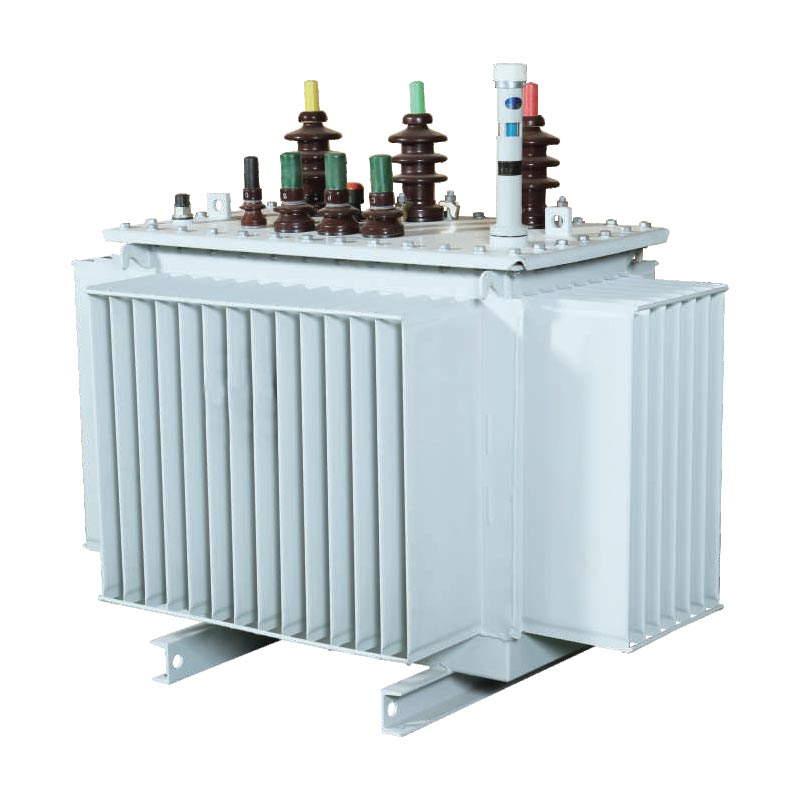
Fire Considerations No transformer oil fire load Requires consideration of liquid type and installation requirements
Typical Maintenance Inspection, cleaning, connections, cooling and monitoring Includes liquid-related inspection and maintenance requirements

The appropriate technology depends on the project rather than on a universal rule. Load profile, space, environmental conditions, fire requirements, installation location, initial cost, lifecycle considerations, and local regulations should all be evaluated.

What Should Buyers Ask a Manufacturer?

For international procurement, technical communication is just as important as the quoted price. Before placing an order, buyers should request clear documentation covering the exact transformer configuration.

  • What is the exact primary and secondary voltage?
  • What vector group is supplied?
  • What are the guaranteed no-load and load losses?
  • What impedance value and tolerance are specified?
  • What winding material is used?
  • What insulation and temperature-rise class applies?
  • What cooling mode is provided?
  • What are the dimensions and shipping weight?
  • What enclosure options are available?
  • Which routine tests are included?
  • Can the manufacturer provide drawings, datasheets, test reports, and installation instructions?
  • Can the design be adapted to the destination country's electrical requirements?

Why Manufacturer Documentation Matters

Published technical documentation from established transformer manufacturers demonstrates that even transformers sharing the same 11kV and 1000kVA ratings can differ in winding material, loss values, vector group, impedance, insulation system, dimensions, and cooling configuration. 

Zhejiang Usune Electric Co., Ltd. can be presented as a potential supplier for customers seeking customized transformer solutions. For a project-specific quotation, the buyer should provide the electrical system parameters, installation environment, applicable standards, delivery destination, and any required accessories or enclosure specifications.

Frequently Asked Questions

Is an 11kV 1000kVA transformer suitable for industrial plants?

It can be suitable for many industrial applications when the 11kV supply, secondary voltage, load profile, installation conditions, protection system, and required capacity match the project. The actual load calculation should be completed before selection.

What is the primary current of a 1000kVA 11kV transformer?

For a three-phase 11kV system, the theoretical full-load primary current is approximately 52.5A. Actual system design should also consider transformer tolerance, operating conditions, protection settings, and network characteristics.

What secondary voltage can an 11kV transformer provide?

The secondary voltage is project-specific. Common low-voltage configurations include 400V, 415V, and 433V, but other voltages can be designed depending on the electrical system.

Does a dry-type transformer need cooling fans?

Not necessarily. Many dry-type transformers operate with natural air cooling. Forced-air cooling can be added when the design requires increased thermal capacity or specific operating conditions.

What standard applies to dry-type transformers?

IEC 60076-11:2018 is the principal IEC standard specifically covering dry-type power transformers within its defined scope. Additional national, regional, project, installation, or efficiency requirements may also apply. 

What is the difference between kVA and kW?

kVA measures apparent power, while kW measures active power. The relationship depends on power factor: kW = kVA × power factor. Therefore, a 1000kVA transformer should not automatically be described as a 1000kW power source.

Can an 11kV 1000kVA dry-type transformer be customized?

Many manufacturers can configure parameters such as secondary voltage, vector group, winding material, impedance, tap range, enclosure, cooling arrangement, accessories, and monitoring system according to project requirements. Every customization should be confirmed against the applicable technical standard.

Final Considerations

An 11kV 1000kVA Dry Type Transformer is more than a combination of voltage and capacity figures. Its real performance depends on the interaction of electrical design, insulation, thermal management, winding construction, core losses, impedance, environmental conditions, protection, installation, and maintenance.

For engineering teams and purchasing managers, the most reliable approach is to begin with the complete electrical requirement and then request a detailed technical proposal. Comparing guaranteed losses, insulation levels, vector group, impedance, temperature rise, dimensions, testing, accessories, and service support can help ensure that the selected transformer matches the actual application.

Zhejiang Usune Electric Co., Ltd. can support customers evaluating medium-voltage dry-type transformer requirements and project-specific configurations. If you are planning a new substation, upgrading an industrial power system, or looking for an 11kV 1000kVA transformer for a commercial or infrastructure project, contact us with your voltage, capacity, frequency, installation conditions, and technical requirements to discuss a suitable transformer solution.

Related News
Leave me a message
X
We use cookies to offer you a better browsing experience, analyze site traffic and personalize content. By using this site, you agree to our use of cookies.Privacy Policy
RejectAccept